





Untamed Art
Circuitous Developments
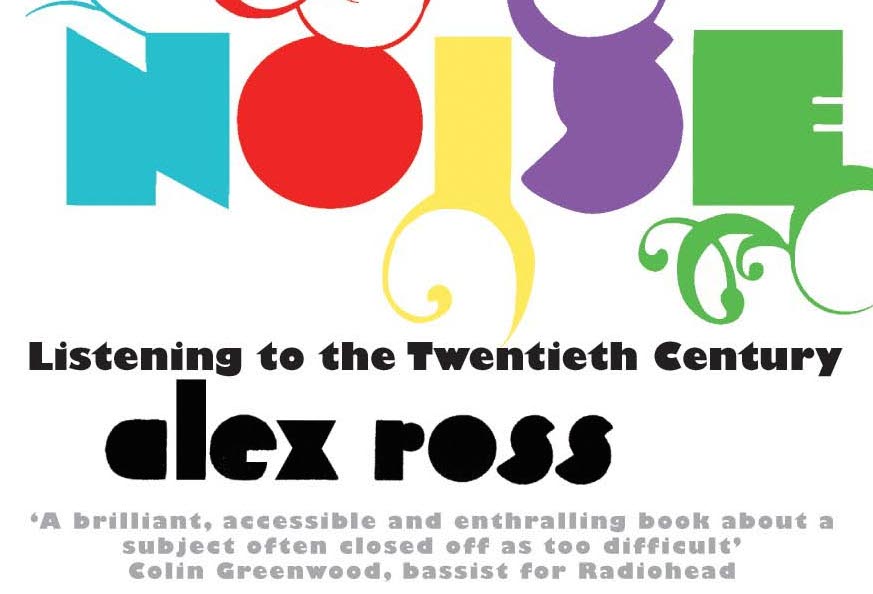
The Rest is Noise opens with Mahler and Strauss in Graz, Austria, on May 16th 1906. Strauss is to conduct his opera, Salome. The city is alive with anticipation, and a youthful Adolf Hitler may be in the audience. The beginning of the book shows Ross’ twin strengths: to paint the picture of what was happening in one place at one time – he does this in a formidable, construct-the-historical-jigsaw, fashion – and then to analyse and describe the performance. As he writes of Salome, ‘In effect, the opera ends with eight bars of noise’. No matter: the burghers of Graz roared their approval: ‘That was the most shocking thing’, writes Ross.
This is the paradox of twentieth century musical life, and it is Ross’ meat and drink: ‘Twentieth century classical composition, the subject of this book, sounds like noise to many. It is a largely untamed art, an unassimilated underground’. In one of scores of felicitous phrases, Ross refers to ‘this obscure pandemonium on the outskirts of culture’.
So, how does Ross handle this obscure pandemonium? By having tastes that are both Catholic – he is a big Messiaen buff – and catholic – Duke Ellington is here, and La Monte Young, and Kurt Weill, and Arvo Pärt, whose ‘strange spiritual purity filled a more desperate need: a nurse in a hospital ward in New York regularly played Tabula Rasa for young men who were dying of AIDS, and in their last days they asked to hear it again and again’.
Ross’ partner, Jonathan Lisecki, may be the filmmaker, but in many instances Ross’ depiction of a piece of music in a particular place – as with Tabula Rasa playing in a New York AIDS hospital ward – is positively cinematic, which may also explain why he rates Bernard Herrmann, the great film-score composer, as highly as he does.
Of course, as an American writer writing for an American publisher – the book is published in the UK this March by 4th Estate – Ross has much to ponder on the history of American composition in the twentieth century. To tell that story, he writes, ‘is to circle around an absent centre. The great African-American orchestral works that Dvořák prophesied are mostly absent, their promise transmuted into jazz. Nonetheless, the landscape teems with interesting life’.
Indeed it does, but the endemic racism that so disfigured American society meant that the stage door of Carnegie Hall was closed to black musicians, who turned instead to ‘ragtime, jazz, blues, swing, R & B, funk, soul, hip-hop, and whatever’s next’. But African-American composition in the twentieth century ‘is full of sorrowful tales’.
There might not have been a black Beethoven, but there was indeed lots of interesting life, and Ross writes well of those composers who ‘came to be called minimalists, although they are better understood as the continuation of a circuitous, difficult-to-name development in American music that dated back to the early years of the century, and more often than not took root on the West Coast’.
‘Circuitous, difficult-to-name developments’ is the core of The Rest is Noise, whether it is the towering figure of Schoenberg in both Europe and California, or Shostakovich enduring Stalin’s terror, or the tight-knit cabal of talent around Benjamin Britten in Aldeburgh. Ross is particularly brilliant on Britten, noting that ‘In Britain, too, the art of composition skewed gay’, for we meet many gay male composers along the twentieth-century path.
But Ross is never scurrilous, as so many other modern writers obsessed with celebrity status and personality have tended to become. He writes about Bernstein or Weill or the wonderfully eccentric Stockhausen with wise tolerance and respect, the exception being, as noted above, the abrasive Boulez, whom he decries in particular for writing a ‘breathtakingly pitiless obituary’ when Schoenberg died in the summer of 1951.
(Sound-) Bath
Ross’ structure is sound as a sonata. He divides the passage of the century into three sections, rattling through the first three decades up to 1933 to begin, then telescoping events down to cover the period to 1945, before opening up the final section to roar through the post-war period until the century’s end.
The book may use classical form, but the diversions and alleyways into which Ross scuttles – an entire chapter on Sibelius, for example – never lose the beat. One is conscious of an author wrestling with the form of his book just as a composer would manipulate the form and mood of his sonata or symphony; the net effect is to make The Rest is Noise a book that seems every bit as composed as it is written.
Certain critics not only describe their genre, they also inhabit it themselves, with a galvanising energy that is utterly convincing. I picked up and began The Rest is Noise, and didn’t do much else until I had it finished, except to pull CDs off the shelves to listen to excerpts from whatever or whoever it was that Ross was describing. This is a big, warm, (sound-) bath of a book, enormously enjoyable, as well as accomplished.
Published on 1 March 2008