

Live Reviews: National Chamber Choir
National Chamber Choir, Paul Hillier (conductor)
Harty Room, Queen’s University, Belfast
11 June 2008
Faced routinely with the deepest sentiments, sacred and profane, where do singers position themselves emotionally? There are two possible approaches: 1. detached mediation, relaying the sentiments through poised delivery, or 2. total immersion in the ecstasies of the moment. The critic Walter Benjamin would have called the latter ‘anthropological materialism’: ‘no one who has never eaten a food to excess has ever really experienced it’. It’s not yet clear which path Paul Hillier will take with the National Chamber Choir, as newly appointed Artistic Director and Chief Conductor. This first programme, with much of the music from the Baltic States, understandably played it safe, at least on a technical level: the polyphony was never of the genuinely rigorous kind and for the most part the gestures were commonplace if effective. This was a concert that principally concerned itself with laying the foundations of sure ensemble. But there are hidden dangers in this repertoire and if the singers should have been pleased with their brave handling of unfamiliar language and the obstinacy of Eastern European tuning, the composers, who of necessity do deal with the overburdening physicality of their imaginations, would have been disappointed. Vaclovas Augustinas’ luminous Lux aeterna and Veljo Tormis’ The Bishop and the Pagan (‘That is what Turku gets! I’ll kill him, kill him, kill him!’), need a far more penetrating vision.
The NCC has had a difficult time in Belfast. Some years ago, when former Artistic Director Celso Antunes was delivering spectacular performances of pieces like Xenakis’ Pour la Paix, the choir sang to handfuls of listeners, and when some of us in the North suggested the move to Queen’s to build an audience the situation looked set to improve.
If I had been asked back then what a five-year plan for the NCC should have looked like I would have offered the following: further develop the specialist wings of your repertoire (the modernist and renaissance masterpieces), invest in new music, develop a direct relationship with your audiences through innovative education and outreach projects and establish yourselves at international festivals. In other words, demand to be taken as the most serious music-makers in Ireland and then tell it to the world.
Recent upsets (the loss of artistic and executive directors) distracted the group and the inevitable result was concerts without focus. But today is the start of a new chapter. Paul Hillier has the experience and personality to take the project on and new Chief Executive Eibhlín Gleeson has ideas that will develop over time. Let’s hope that funding bodies have the courage to let the NCC become a superb Irish ensemble of international stature. On the evidence of this concert it may take five years yet, but everything is now in place and the transformation demands to be made.
Published on 1 September 2008
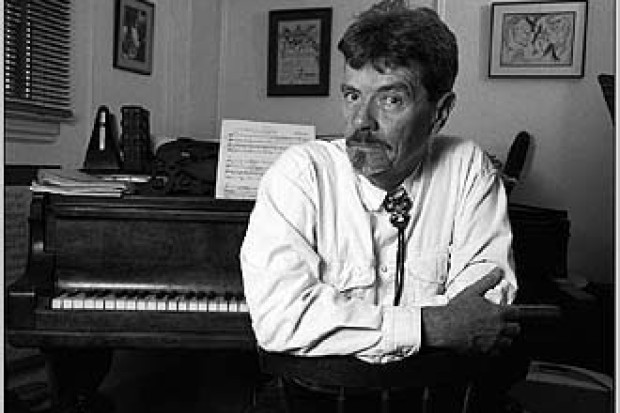
Peter Rosser (1970–2014) was a composer, writer and music lecturer. He was born in London and moved to Belfast in 1990, where he studied composition at the University of Ulster and was awarded a DPhil in 1997. His music has been performed at the Spitalfields Festival in London, the Belfast Festival at Queen’s and by the Crash Ensemble in Dublin. In 2011 the Arts Council acknowledged his contribution to the arts in Northern Ireland through a Major Individual Artist Award. He used this award to write his Second String Quartet, which was premiered in 2012 by the JACK Quartet at the opening concert at Belfast's new Metropolitan Arts Centre (The MAC). Peter Rosser also wrote extensively on a wide range of music genres, with essays published in The Journal of Music, The Wire, Perspectives of New Music and the Crescent Journal. He died following an illness on 24 November 2014, aged 44.